Explore / 01
Find a packaging direction
Compare opening styles and formats around the product, sales channel and presentation you have in mind.
Compare packaging ↗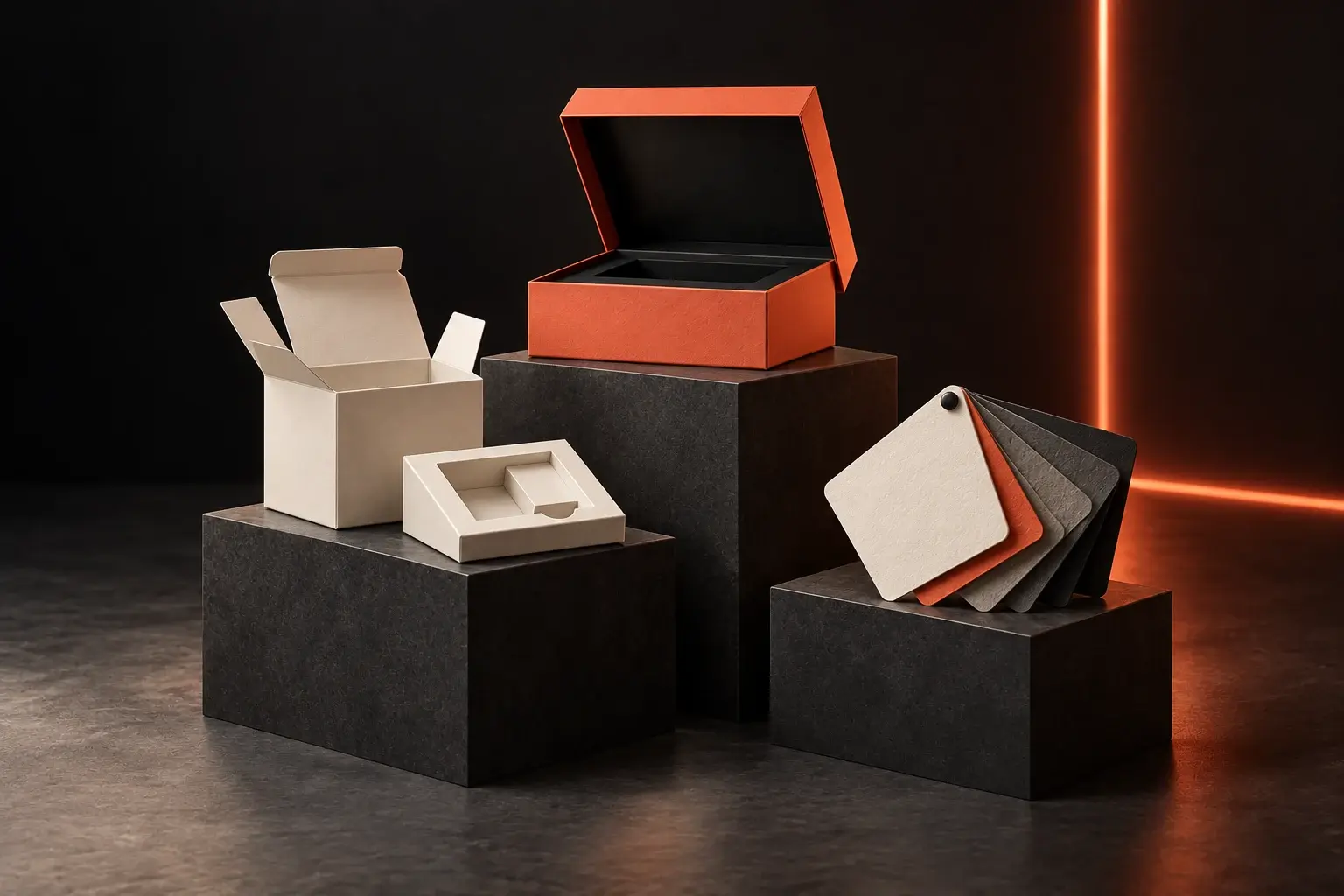
Packaging questions, clearly answered
Find practical answers for your packaging project, from choosing a box style to preparing artwork, reviewing samples and planning delivery.
A good place to start
40 questions across eight topics
FAQ topic
Yes. Foldelle manufactures packaging in our own factory. We work with you on the structure, materials, printing details and sample requirements, then use the approved specification to guide production.
Our factory was established 17 years ago. This refers to the history of our manufacturing facility, rather than the age of the Foldelle brand.
Our listed credentials include FSC, ISO 9001, ISO 45001 and SGS. Ask for the relevant documentation and confirm its scope for your project before agreeing a specification. Sustainable sourcing is a project goal, not a standalone certification; discuss any specific material or environmental requirements in your inquiry.
Our packaging range includes rigid boxes, magnetic gift boxes, folding cartons, mailer boxes, shipping boxes, paper tube boxes and paper bags. Start with the product and how the packaging will be used; we can then discuss a suitable format and the details needed for a quote.
Yes. You can start with a product, estimated quantity, delivery destination and a few visual references. Explain the decisions you have already made and leave the remaining choices open for discussion.
FAQ topic
Begin with how the product will be presented, packed and used. Compare the opening style, product arrangement and sales channel, then share the product dimensions and any preferred references. If you have not chosen a format, select the recommendation option instead of guessing a structure.
Consider the selected structure, product size and weight, desired surface and handling requirements. You can provide a preferred material and thickness or ask for a recommendation. If you have an existing specification, include its units and explain whether the number describes thickness or paper weight.
Describe the artwork, which surfaces need printing and any desired decorative or protective treatments. The printing method and finishing requirements are reviewed against the material and structure. Printing process and printing color are recorded separately; color is the fifth selection step.
Start with what the insert needs to hold, where it can contact the product and how the product should be removed. Share each item’s dimensions and weight, especially for a multi-product set. If an insert is unnecessary or you are unsure, record that instead of choosing a material without a clear purpose.
Share the artwork colors and any brand color references or existing printed samples you want us to review. Tell us if your design calls for process colors, specified spot colors or a recommendation. The selected material and printing method remain part of the color review, so the final appearance should be assessed through the agreed proof and sample process.
FAQ topic
Yes. Share the product, selected packaging style, presentation goals and expected handling. These details provide a starting point for comparing material directions. Any proposed stock and thickness should be recorded in the specification before production is approved.
Copy the value and unit from your current specification or material reference rather than sending an unlabeled number. Keep thickness and paper weight in separate fields. If you only have a sample or do not know which measurement it uses, describe that uncertainty and request a recommendation.
Yes. Include the material name, reference, texture or sample information you have. Availability and suitability need to be reviewed for the selected structure and printing requirements. If an alternative is proposed, compare it with your original priority rather than assuming it will look and behave identically.
Name the requirement and explain which packaging components it needs to cover. Request the relevant supporting documentation and agreed claim wording as part of the specification review. A certification or credential listed on the website should not be treated as a complete description of every component in a proposed pack.
Yes. Share the same logo files, artwork references and desired surface character for both. Paper, structure and production choices can differ between a box and a bag, so review the proposed combination together and agree the acceptable appearance through samples.
FAQ topic
Yes. Indicate which panels or surfaces need artwork and include any interior message or insert printing in the brief. The proposed construction and printing route determine how those areas are prepared. Make sure the quote identifies the printed surfaces rather than assuming all sides are included.
Identify the effect, its location and which part of the artwork it applies to. Keep those details separate from the printing method and color references. If several finishes are requested, state which is essential and which could be removed or changed while the specification is being developed.
Yes. Send the reference information you use for your brand and explain whether there is a physical item the packaging should be compared against. Keep that reference with the artwork version and selected material so it remains clear throughout the proof and sample review.
A digital preview helps review artwork placement, orientation and overall layout. It should not be used alone to approve the physical color, texture or finish. Confirm which proof or sample is appropriate for those decisions and note any differences from the intended production process.
Include each version in the inquiry and state the quantity required for each. Differences in artwork, printing or materials may change the production scope. Ask for those versions to be identified in the quotation and approval records so a combined project total is not mistaken for one identical run.
FAQ topic
The website presents paperboard, corrugated, molded pulp and foam directions, depending on the packaging and application. The starting point is the support the product needs, how it will be loaded and removed, and any material preference. The final insert material and construction are confirmed for the particular project.
Yes. Share the dimensions and weight of every item, together with the intended arrangement. Include any parts that must be kept apart or surfaces that should avoid contact. Review the complete layout with the actual products during sampling.
You may send either, but label them clearly as product dimensions, internal packaging dimensions or external packaging dimensions. Include the unit and measurement order. If you only know the product dimensions, say so; the packaging still needs to account for the selected construction and any insert or additional packing.
Identify the fragile parts, contact-sensitive surfaces, product weight and intended delivery route. Describe any existing packing problems or requirements. Product fit, insert support and the complete shipping pack need to be reviewed together; a presentation box alone is not a statement of tested transport performance.
For paper bags, use that stage to describe reinforcement and supporting items, such as a base card or tissue, rather than a box insert. Provide the contents, carrying orientation and intended load. Handle requirements remain a separate part of the bag specification, and you can leave optional supporting items undecided.
FAQ topic
Minimum quantities depend on the structure, size, materials, printing and finishing requirements. Share your target quantity and specify whether it covers one design or several sizes and artwork versions. We will review the practical starting quantity for the proposed specification rather than apply one number to every packaging type.
Yes. Tell us the quantity you would like to start with and which features are most important. Smaller-order feasibility needs to be assessed against the complete specification. If a requested combination is not practical, the discussion can identify which choices would need to change before a quote is confirmed.
Start with the product, dimensions and weight if known, packaging type, quantity and delivery destination. Add your required arrival date and any preferences for material, thickness, printing, insert and color. Mark open choices clearly so the assumptions behind a preliminary proposal can be explained.
Check the specification, quantity per version, currency and which work is included. Identify samples, development, tooling or setup, inserts, assembly and delivery as included, separately charged or still open. Do not assume a quoted box price includes every part of the project.
Yes. State the requirements that must remain fixed, then identify areas where you are open to change, such as structure, material, finishing or assembly. Ask for alternatives against the same product and delivery needs. Compare the total scope and any work left for your team, rather than the unit price alone.
FAQ topic
No. You can begin by discussing the product, structure, size and material. Explain the stage your artwork has reached. Production artwork should be prepared against the confirmed structural layout rather than a guessed template.
The structure and dimensions need to be defined before the production artwork layout is finalized. Keep the approved dieline version with your artwork and do not change its scale or geometry without review. If you have an existing dieline, provide it as a reference and explain which specifications it was created for.
A structural sample helps review the shape, product fit, insert, opening and packing sequence. A printed sample helps review artwork placement and the proposed material and appearance. Confirm what each sample will represent and any differences from the intended production materials or process.
They are reviewed against the structure, artwork, materials, finishing and sample scope. Ask the quotation to identify what is included, whether revisions are covered and how sample delivery is handled. Do not assume samples are free or that the same schedule applies to every project.
Check the product fit, loading and removal, opening and closure, artwork orientation, printed appearance and finishing details. Record the approved artwork and specification versions, along with any accepted differences or remaining changes. A clear approval record gives production a defined reference.
FAQ topic
We review the selections and any open questions, then confirm the quotation and sample requirements. The approved specification and order scope guide production in our own factory. Inspection and delivery details are addressed as part of the confirmed project.
Share the date the packaging needs to arrive, not only the date you hope to place the order. The schedule needs to account for specification decisions, artwork, samples, approvals, production and transport. Confirm a project-specific plan and revisit it when important requirements change.
That depends on the selected structure and agreed supply state. Ask for the condition of both the outer pack and the insert to be stated, including any folding, fastening or fitting that remains at your packing site. Compare the assembly work as well as the shipment size when selecting a format.
Provide the destination and any important receiving requirements. Ask which transport and handling charges are included, the agreed delivery scope and what remains your responsibility. Confirm any applicable import or local receiving requirements for the actual shipment rather than assuming they are covered by the packaging price.
For a repeat order, reference the previous specification and artwork version, state the new quantity and identify any changes. For an issue with a delivered order, provide the order reference, affected quantity, photographs and a clear description so it can be reviewed against the agreed specification and order terms. A previous order does not automatically fix the price, timing or treatment of a later change.
Put the answers to work
You do not need to settle every detail before speaking with us. These resources help separate what you know from what needs review.
Explore / 01
Compare opening styles and formats around the product, sales channel and presentation you have in mind.
Compare packaging ↗Understand / 02
Follow the five choices that shape a specification, then see how previews, samples and production fit together.
Follow the process ↗Prepare / 03
Bring product measurements, a quantity range, a destination and visual references. Mark undecided choices as open.
Open the brief toolkit ↗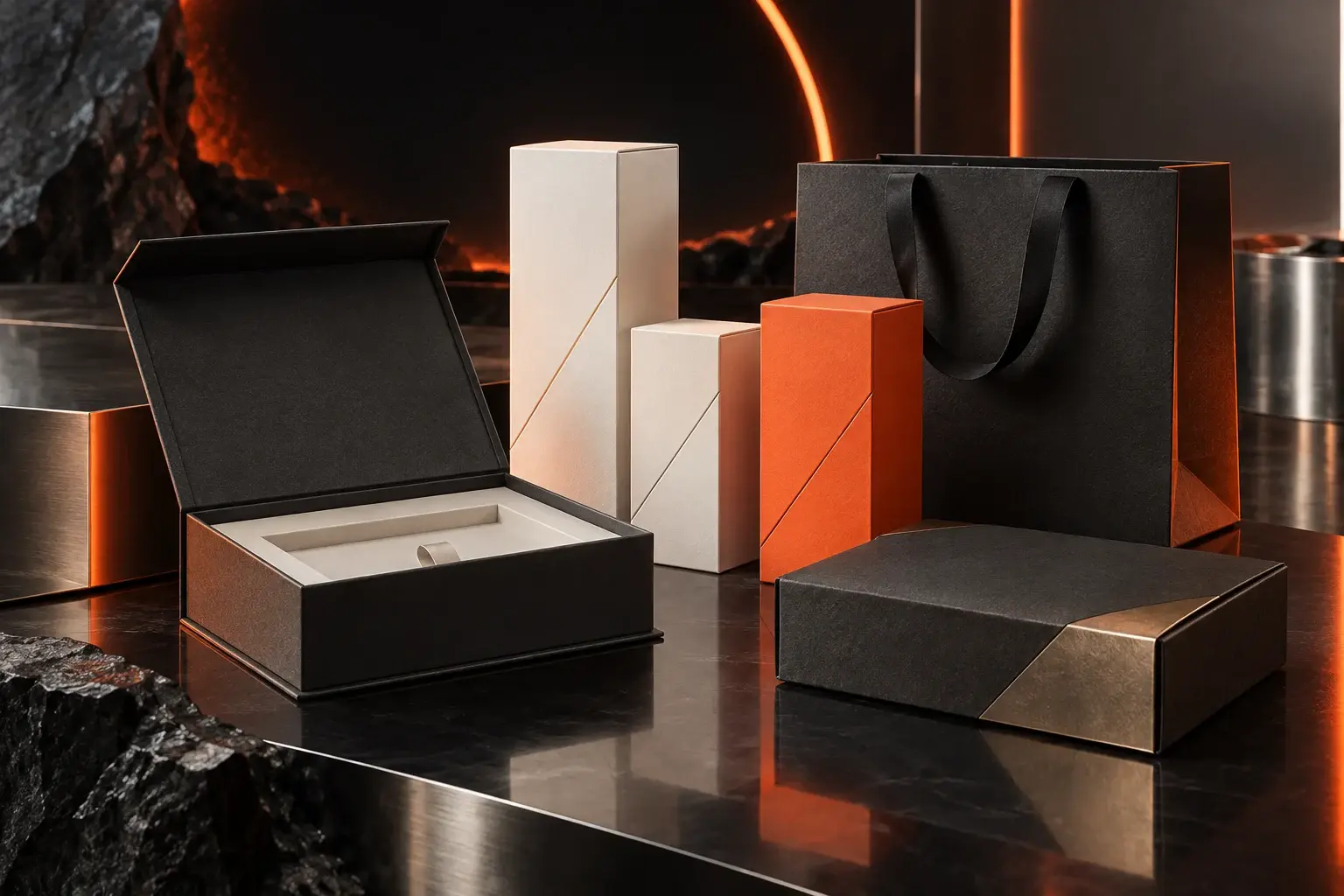
Your next packaging project
Bring your product, quantity and references. We’ll help turn the open questions into a practical brief.
Start Your Packaging Project