Skip to content

The material library / Foldelle®

Packaging Materials
& Finishes

Paper, board, print, surface finish and inserts work as one specification. Explore how each choice shapes the way your packaging looks, feels and holds the product.

Developed, sampled and manufactured through our own factory.

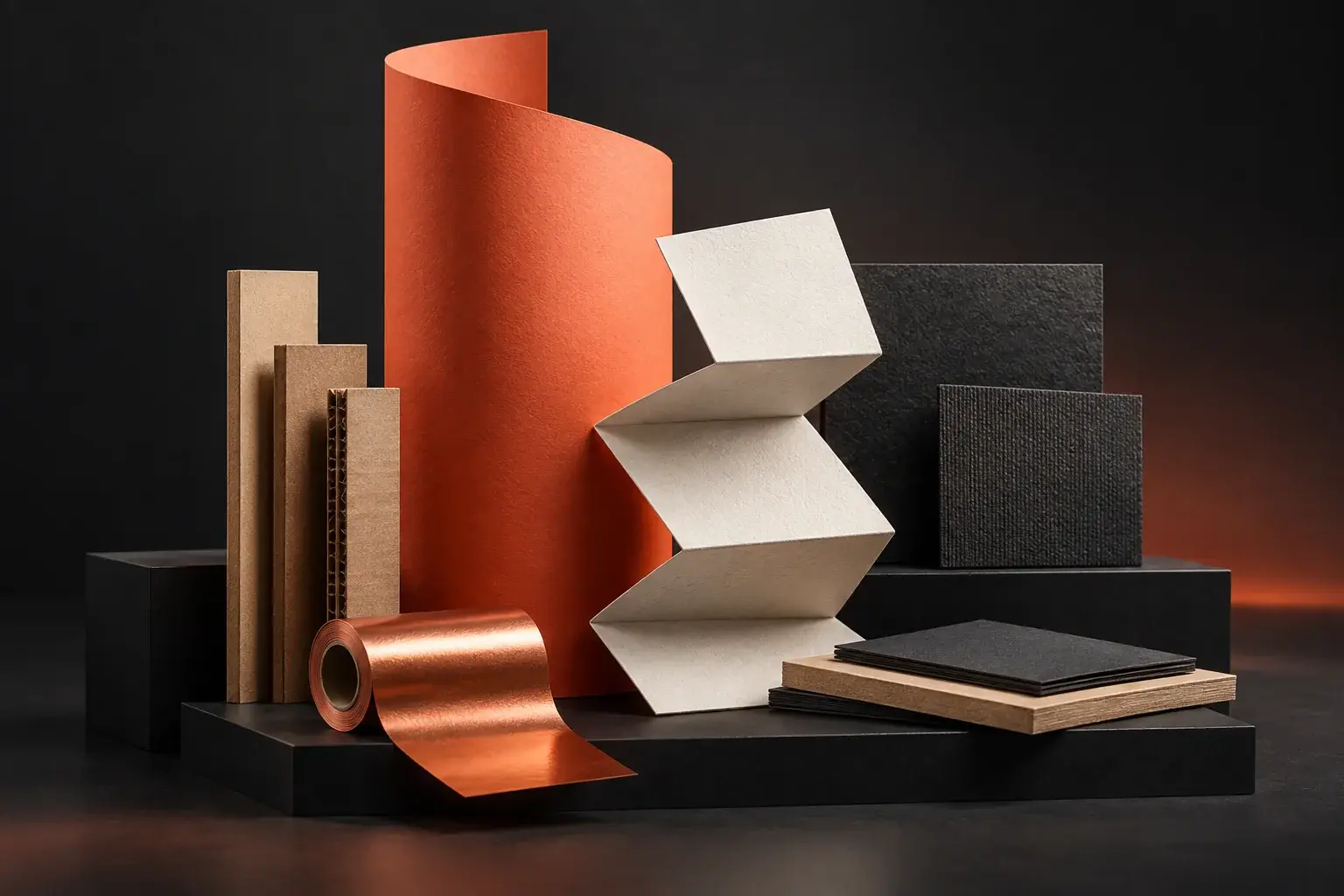
AI-generated sculptural study of coral paper, ivory folds, board and copper foil
Texture. Structure. Surface.AI-generated material concept

The starting point

Choose the foundation.
Then refine the feel.

Start with the product, the opening experience and the journey to your customer. These are directions to discuss—not fixed stock specifications.

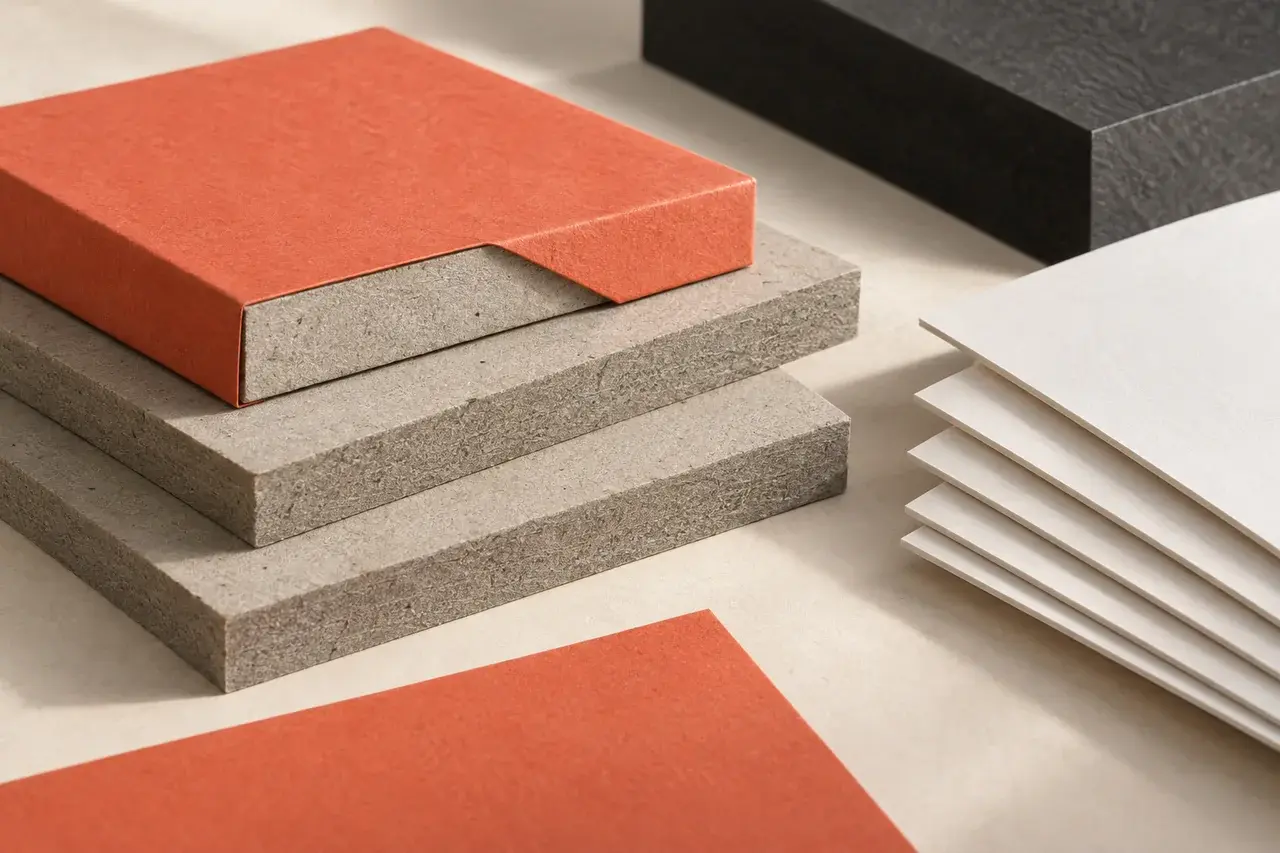
AI-generated comparison of greyboard cores, a coral paper wrap and white paperboard sheets

01 / Greyboard & paperboard

The structural foundation.

The supporting board and the visible surface do different jobs. Choose them together around the size, weight and presentation of the product.

Wrapped greyboard
A rigid core with a separate paper wrap. Discuss it for presentation boxes and magnetic gift boxes.
Solid bleached paperboard
A paperboard direction for folding cartons. Review the folds, closure and print surface together.

Confirm in your briefConfirm the core grade, thickness, wrap and finished internal dimensions.

Explore rigid boxes ↗
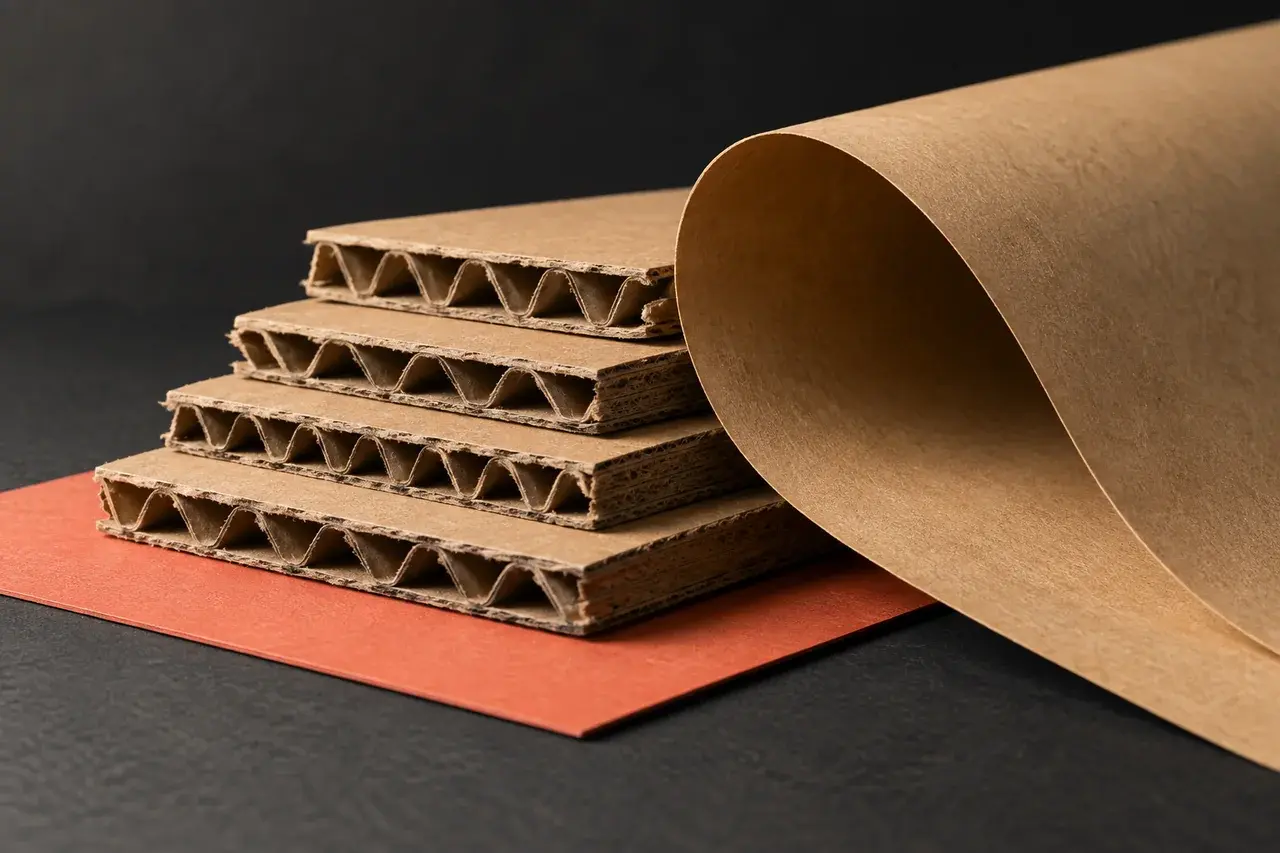
AI-generated close-up of kraft paper and corrugated board showing flute cross-sections

02 / Kraft & corrugated

Built for the journey.

Consider the packing and shipping journey alongside the look of the pack. A natural-looking surface is a visual choice, not a certification by itself.

Kraft paperboard
A direction for a natural paper appearance. Check the chosen stock color against your artwork.
Corrugated board
A direction for mailers and dividers. Review the flute, liner and structure with the packed product.

Confirm in your briefConfirm the board construction, print route and whether a separate shipping pack is needed.

Explore mailer boxes ↗
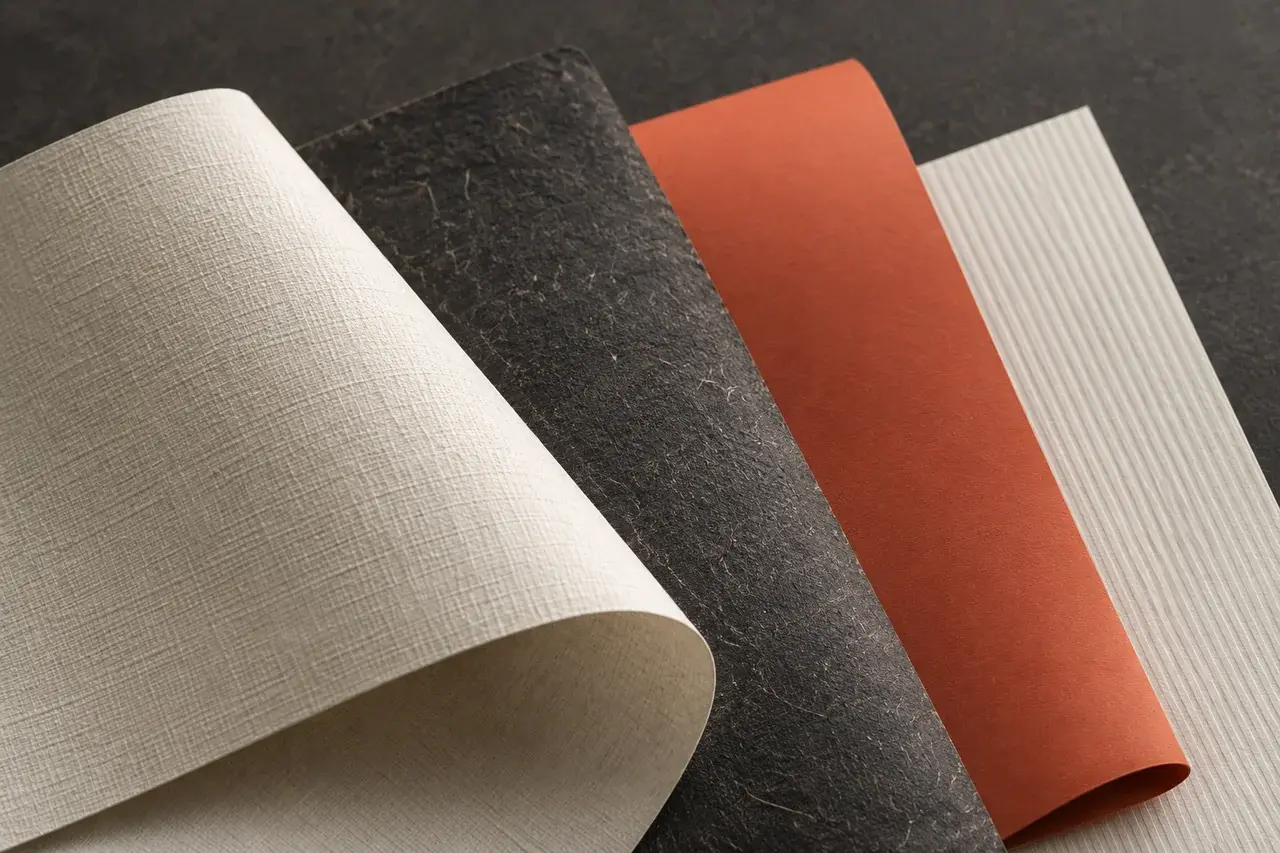
AI-generated material study of linen-textured ivory, charcoal, coral and ribbed specialty papers

03 / Wrapping & specialty papers

A surface with character.

The paper you see and touch sets the tone. Bring a reference for texture, shade and feel, then review it with the intended printing and finish.

Coated and uncoated papers
Compare the surface and printed appearance on the actual stock selected for the project.
Textured specialty papers
Explore tactile wrapping or bag directions. Check how fine artwork and decorative details read on the texture.

Confirm in your briefConfirm paper availability, shade, grain direction and suitability for wrapping or folding.

Explore paper bags ↗

AI-generated material illustrations. Actual shade, texture, thickness and availability are reviewed for your selected specification.

Read the specification

Weight is not thickness.
The structure matters, too.

A single number cannot describe the finished pack. Keep the material name and unit attached to every specification.

g/m²

Paper weight / GSM

Mass per square metre. Useful when discussing paper stock, but not a direct measurement of its thickness or the strength of a finished box.

mm / µm

Thickness / caliper

The distance between the two surfaces. Record the unit and clarify whether it describes the core board, wrap or finished combination.

Fit + form

The assembled result

Product weight, dimensions, folds, closures and inserts work together. Check the complete structure with the actual product during sampling.

Have an existing sample but no specification? Share clear photos and the product dimensions as a starting point.

Material FAQs ↗
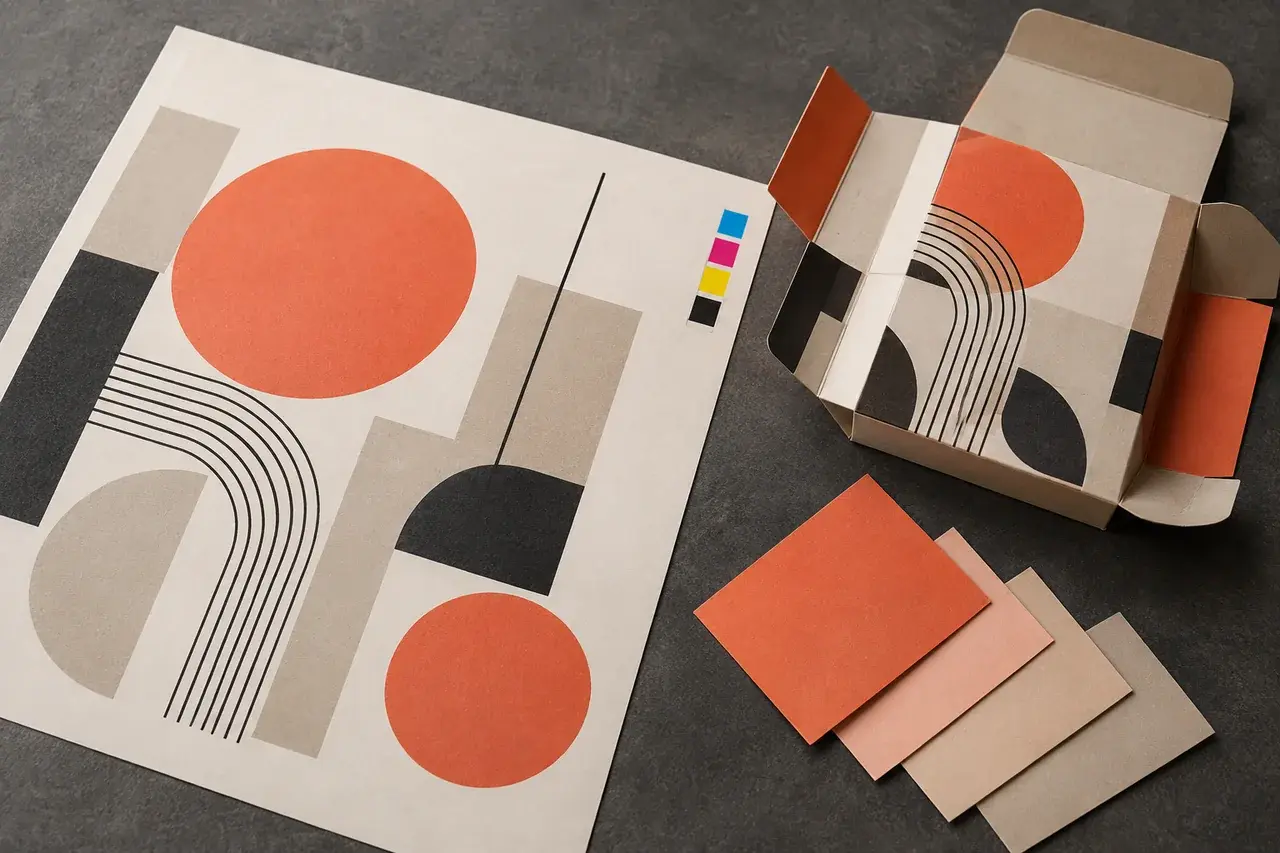
AI-generated printed artwork sheet, carton mockup and unlabeled color swatches
Illustrative print study, not a color-accurate proof.

Artwork meets paper

Give the design
the right print direction.

Print methods and protective surfaces are evaluated against artwork, stock and construction. Share the complete layout, not only the logo.

Offset or digital printing
Discuss the artwork, quantity and selected stock so the production method can be reviewed for your project.
Direct corrugated printing
Review the liner surface, artwork detail and desired appearance together with the mailer structure.
Inside & outside
Plan printed interior liners and interior messaging alongside the external design. Mark the surfaces you want printed.

Color reference checklist

Bring a reference.
Approve a physical result.

  • Specify the reference. Share your brand color reference and artwork files; identify any color-critical areas.
  • Name the surface. The stock, coating and finish influence appearance. Coated and uncoated paper can produce different results.
  • Agree on the approval sample. A screen preview supports layout review. Confirm the physical sample or reference for the final color direction.

A considered final layer

Let the surface
do something intentional.

Focus, contrast or tactility: start with the effect you want, then review the finish on your selected stock and artwork.

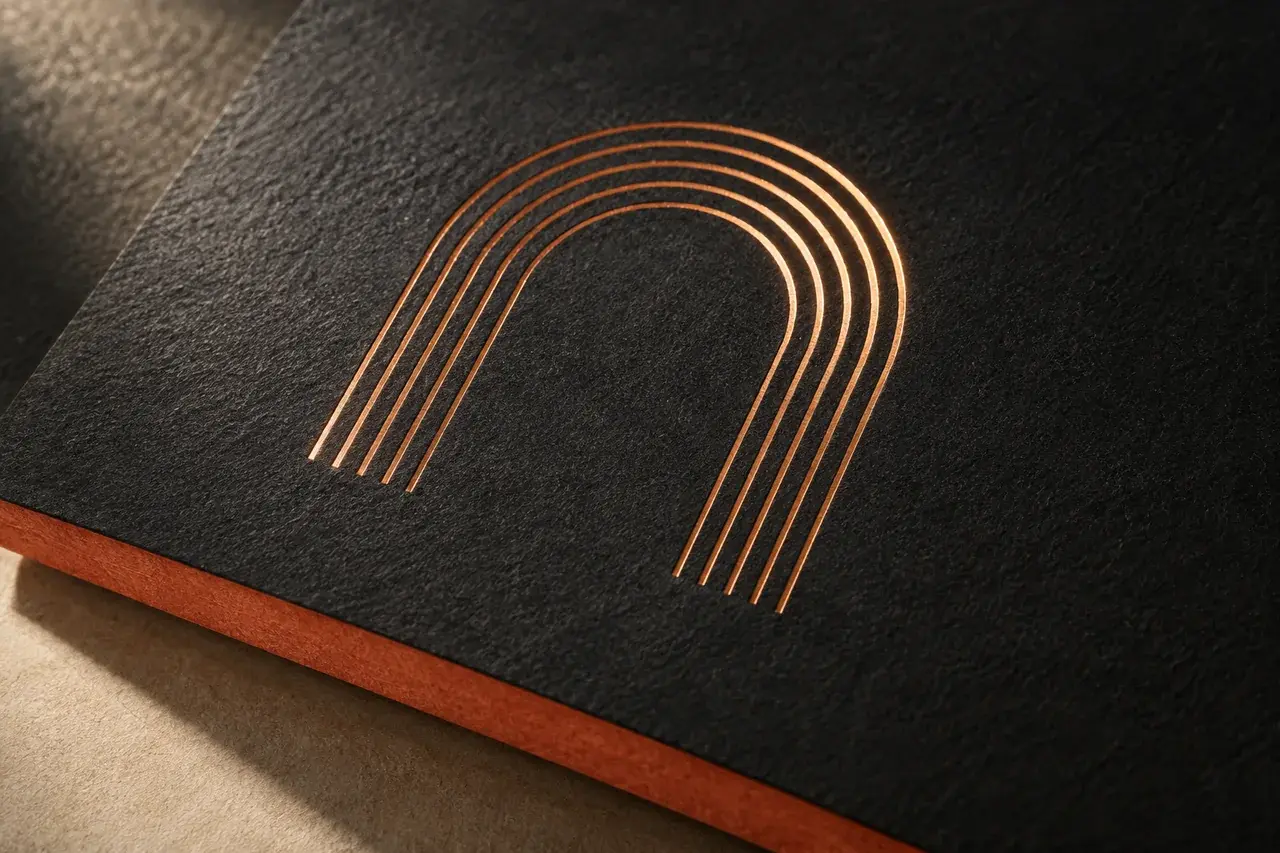
AI-generated copper foil arch on tactile charcoal paper

Light & emphasis

Foil stamping

Use a metallic detail to draw attention to a mark, border or small focal area. Start with where the eye should go, rather than adding foil everywhere.

What to check before approval
  • Foil shade and coverage
  • Fine lines and clear spaces
  • Placement on the selected paper
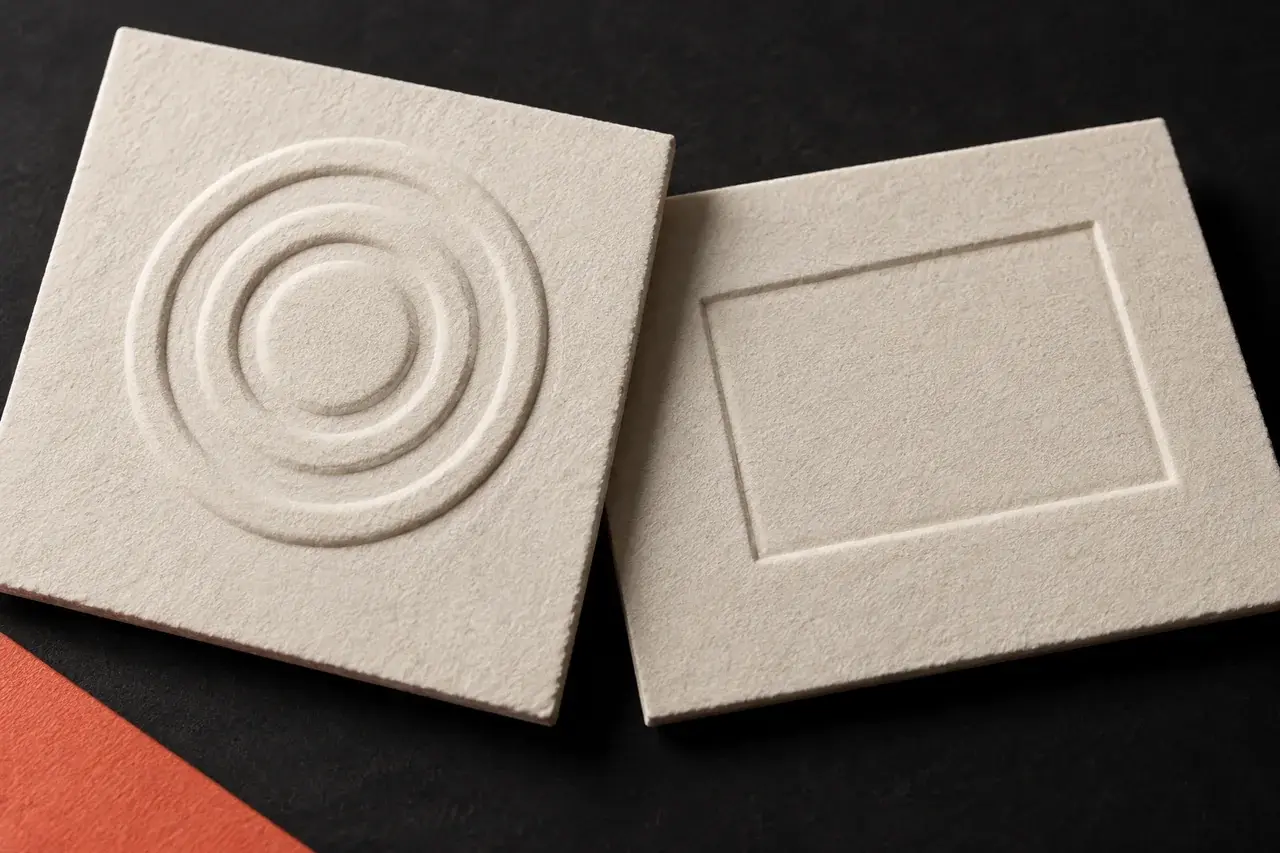
AI-generated ivory samples with raised circular and recessed rectangular paper details

Depth & touch

Embossing & debossing

Raised or recessed details introduce tactility. A simple shape can carry the idea; review the depth and its relationship with printed or foiled artwork.

What to check before approval
  • Relief and legibility
  • Paper and board suitability
  • Alignment with other artwork
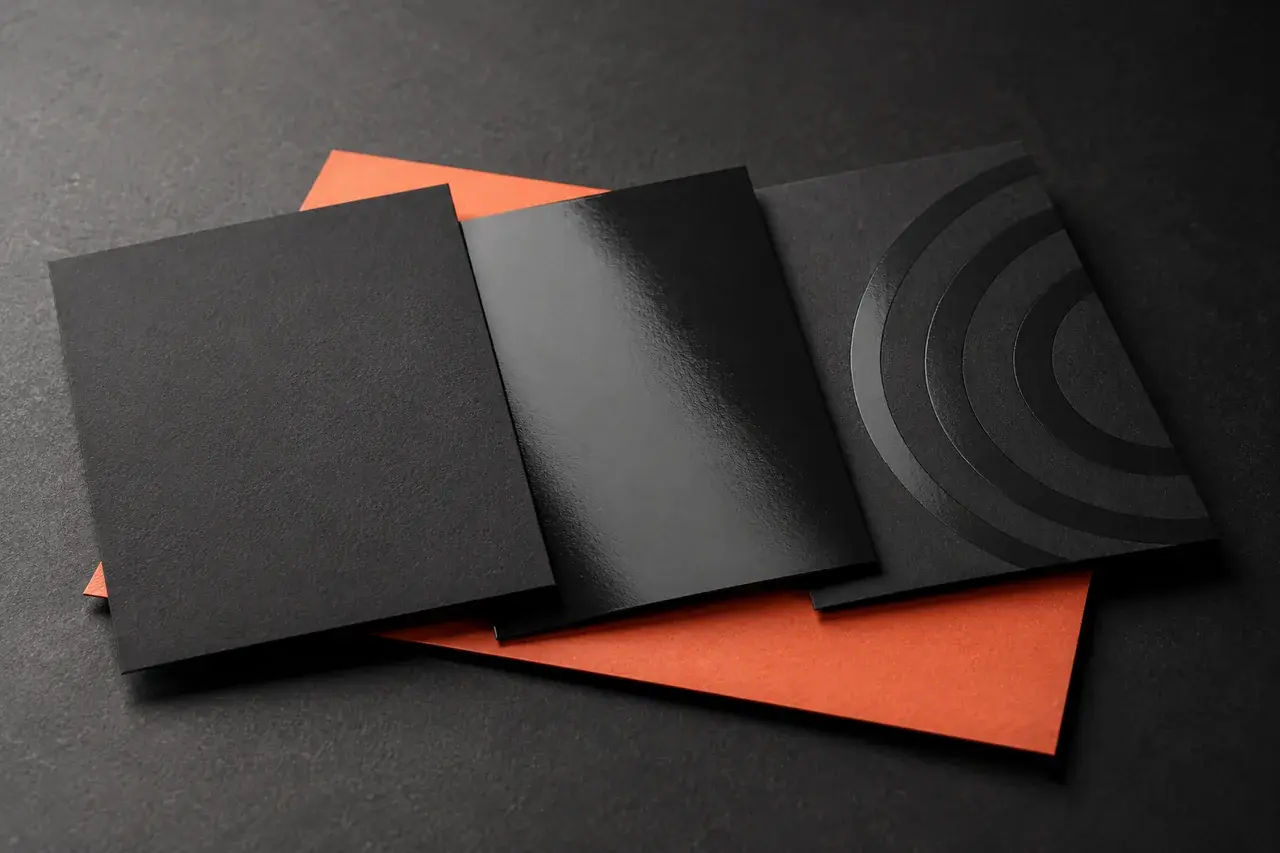
AI-generated charcoal sample cards illustrating matte, gloss and selective glossy details

Matte / gloss / selective shine

Surface & contrast

Discuss matte or gloss lamination, soft-touch directions, protective coatings and spot UV. Select the combination for both appearance and handling.

What to check before approval
  • Desired reflection and feel
  • Handling and marking expectations
  • Compatibility with other finishes
Beyond the surface

Die-cut windows, ribbon details and coordinated interior messaging can also be part of the brief. Review their positions, construction and assembly with the complete pack.

AI-generated finish concepts illustrate visual differences, not guaranteed reproduction. Final combinations are confirmed through artwork and sample review.

Support what is inside

The insert is part
of the packaging design.

Protection, presentation and easy removal should be considered together. Share every item’s dimensions, weight and intended arrangement.

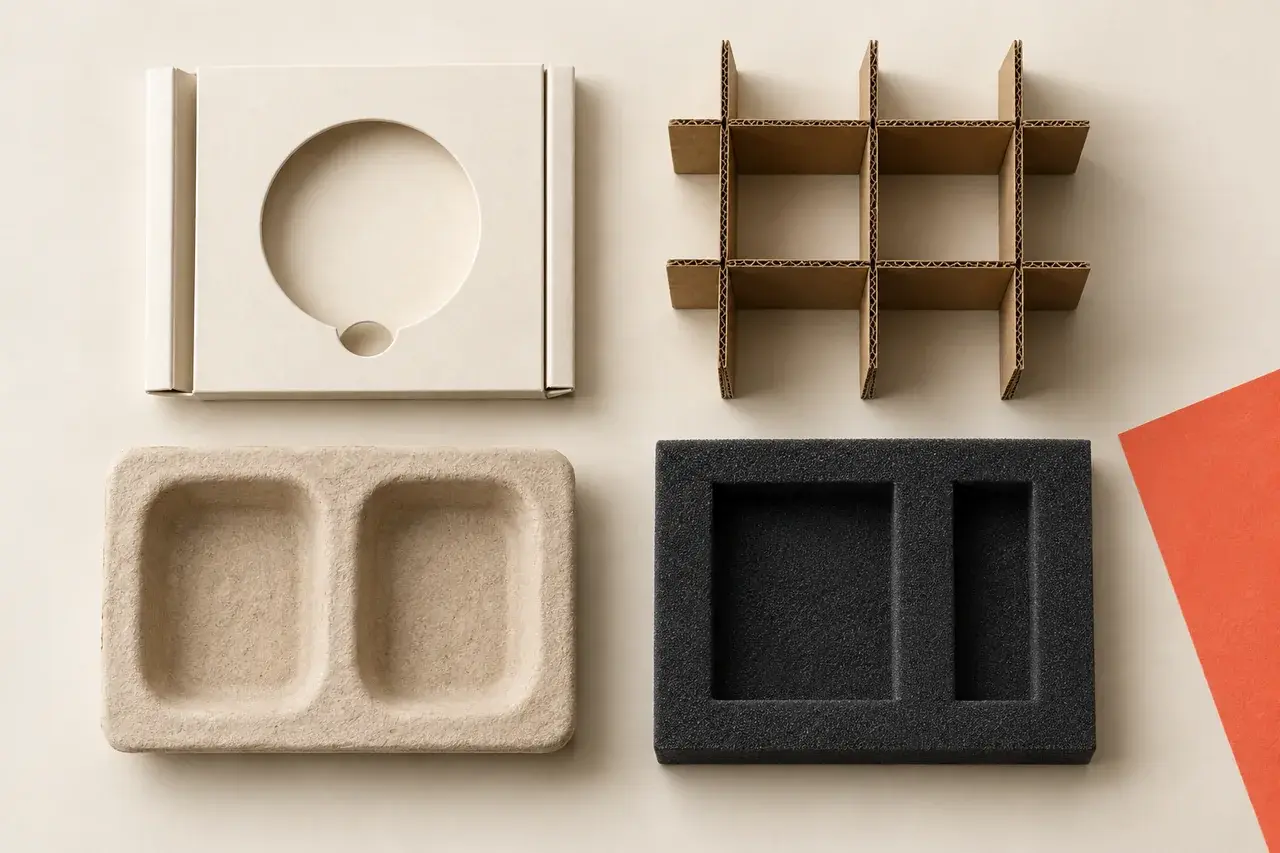
AI-generated examples of folded paperboard, corrugated divider, molded pulp and foam inserts
Illustrative insert directions; cavities and fit are developed for the actual product.

Die-cut paperboard

Platforms and folded supports developed around the product shape, with access for removing the item.

Corrugated dividers

Compartments that separate multiple items. Review the divider layout with the outer pack and packing sequence.

Molded pulp

A formed-fiber direction to evaluate for the required shape, surface and project quantity.

Foam where appropriate

A fitted direction to discuss where the product needs it. Confirm the foam type, contact surfaces and disposal requirements.

Paperboard platforms, ribbon pulls and other fitments can help with presentation and access. For paper bags, discuss handles, reinforcement and accessories instead of a box insert.

Explore fit and insert FAQs ↗

Material requirements

Make the requirement
part of the brief.

Tell us which sourcing, certification or testing requirements matter to the order. Review the applicable material and supporting documentation before approving the specification.

About our factory & credentials ↗
  • 01

    Identify the component.

    Be specific about the paper, board, insert, coating or complete pack your requirement applies to.

  • 02

    Define the evidence.

    Share the documentation or test requirement that needs to be reviewed for the selected material and order.

  • 03

    Review the whole combination.

    Consider finishes, adhesives, inserts and the destination’s disposal guidance. A kraft appearance alone does not establish recyclability or certification.

From direction to approval

See it. Handle it.
Confirm it together.

Foldelle connects development, sampling and production through our own factory. One approved specification keeps the choices aligned.

  1. Choose Box Style

  2. Choose Material & Thickness

  3. Choose Printing Process

  4. Choose Box Insert Material

  5. Choose Printing Color

Structure

Usable dimensions, product fit, opening, assembly and packing sequence.

Appearance

Paper feel, artwork position, color reference, finish coverage and alignment.

Scope

Which details the sample represents, what remains open and what is approved for production.

Before you choose

A few useful
starting questions.

All materials FAQs ↗
Can you recommend a material if I only have the product?

Yes. Share the product dimensions, weight, quantity, destination and a few visual references. Foldelle can help narrow the structure, material and finish direction before a full specification is available.

How do I decide between paper weight and thickness?

Send whichever specification you have, including the unit and material name. GSM describes mass per area; millimetres or microns describe thickness. They are not interchangeable, and the assembled structure still needs to be reviewed with the product.

Can I combine foil, embossing and a surface finish?

Bring the combination you have in mind. We review the artwork, selected stock, finish positions and production sequence together. Confirm the feasible combination and the details represented by the sample before approval.

Will a digital preview show the final color and texture?

A preview helps review layout and artwork placement. It cannot reproduce paper feel or every lighting effect. Confirm the physical reference or printed sample that will be used to review the agreed appearance.

AI-generated paper, board and foil material study

Your next packaging project

Good questions.
Better packaging.

Bring your product, quantity and references. We’ll help turn the open questions into a practical brief.

Start Your Packaging Project