The packaging journal / Buying guide
Premium Packaging, Less Waste: A Practical Guide for Brands After the EU PPWR Rollout
Right-size the pack. Keep the protection. Make every component earn its place.
By Foldelle Packaging · · 8 min read
Plan your next packaging brief
A small perfume bottle sits inside a large gift box, surrounded by filler. That box goes into another shipping carton with more padding. The reveal may look generous, but which layers protect the bottle, and which simply make the package bigger?
For beauty, fragrance, jewelry, gift and DTC brands selling into the EU, the PPWR rollout makes that question timely. Sustainable gift packaging starts with a practical review of dimensions, structure and components—not a material claim on the lid. The goal is a package that arrives intact, feels intentional and avoids unnecessary material.
What the EU PPWR Rollout Means for Packaging Buyers
The European Commission’s packaging overview confirms that Regulation (EU) 2025/40 entered into force on February 11, 2025, and began applying on August 12, 2026. It covers packaging placed on the EU market regardless of material or origin. A brand outside the EU therefore needs to review its EU sales route and the responsibilities of its importers and other operators.
The Commission’s rollout announcement describes a phased transition. General application does not mean every design, labeling or reuse measure became mandatory in August 2026. Separate the following requirements:
- Recyclability: Commission guidance explains that the general Article 6(1) duty applies from August 12, 2026, subject to exemptions. Harmonized design-for-recycling and performance-grade requirements follow from January 1, 2030, or 24 months after the relevant delegated acts enter into force, whichever is later.
- Packaging minimization: Article 10’s weight-and-volume requirements apply from January 1, 2030. Existing minimization obligations continue during the transition; this is not permission to add unnecessary layers now.
- Empty space: Article 24’s 50% maximum concerns operators filling grouped, transport or e-commerce packaging—not a blanket limit for every retail gift box. It starts January 1, 2030, or three years after the methodology acts enter into force, whichever is later. Fillers count as empty space. Paragraph 5 exempts sales packaging used as e-commerce packaging and reusable packaging within a reuse system; Article 10 still applies. Sales packaging has a separate minimum-necessary-space duty by February 12, 2028.
- Sorting labels: Article 12’s harmonized material-composition label starts August 12, 2028, or 24 months after the relevant implementing acts enter into force, whichever is later. Transport packaging other than e-commerce packaging, and deposit-and-return packaging, are excluded from this obligation.
Check the regulation’s relevant articles against your specific pack and market before artwork approval. PPWR packaging decisions need a documented specification; a supplier’s general sustainability statement cannot establish compliance.
Start with the Product: How to Choose the Right Box Size
Measure the finished product at its widest points, including caps, pumps, handles and protruding decoration. Record weight, surface sensitivity and vulnerable areas. A bottle’s shoulder and closure may need different support from its base; a polished jewelry surface needs protection from rubbing.
For a set, arrange actual products before deciding the box footprint. Leave room for retention, manufacturing tolerances, easy removal and the intended opening sequence. Specify internal box dimensions separately from external dimensions, then account for board thickness and the insert.
Size the system, not only the product.
- 01Product envelope
Include the cap and vulnerable surfaces.
- 02Insert & clearance
Allow retention and comfortable removal.
- 03Gift box
Distinguish internal fit from outer dimensions.
- 04Shipping carton
Plan transit protection around the finished gift pack.
Planning diagram, not a dieline. Clearances and wall thickness need sample confirmation.
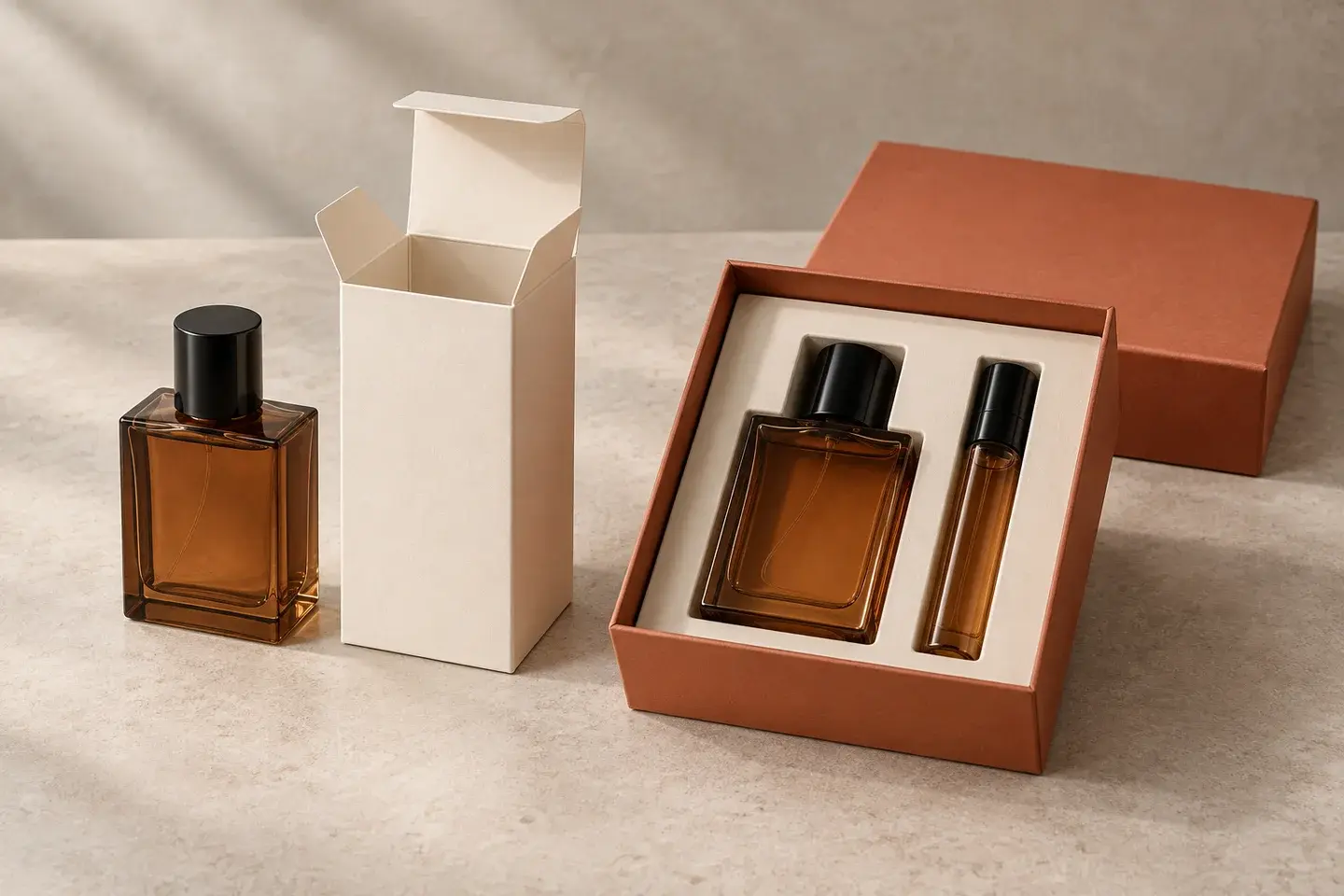
Plan the gift box and shipping carton together. Include protective clearance, sealing and label space. Right-sized packaging can reduce material and freight volume when the final pack is smaller, but carrier pricing thresholds, assembly work and damage performance determine the actual result.
Choose the Box Structure Around the Buying Experience
Start with the journey: shelf purchase, hand-delivered gift or parcel shipment. Custom gift boxes should support that experience without duplicating jobs across layers.
On smaller screens, scroll the comparison horizontally.
| Structure | Typical use | Buying considerations | Limitations |
|---|---|---|---|
| Rigid gift boxes | Jewelry, fragrance sets and presentation-led gifts. | Review board, wrap, closure, insert and supplied assembly state. | Assembled boxes occupy storage volume; decorative construction may still need a shipper. |
| Folding cartons | Individual cosmetics, perfume and small retail products. | Match board grade, base closure and packing method to product weight. | Thin panels may need reinforcement or an insert; a retail carton is not automatically parcel-ready. |
| Corrugated mailer boxes | DTC orders, subscriptions and shipped gift kits. | Confirm flute, liners, retention, closure and transit-testing needs. | Outer print can scuff; a smooth retail finish or a fragile product may require additional design work. |
A printed mailer might combine delivery and presentation. Keep a separate gift box when it serves a clear retail or gifting need, and test the complete shipping system.
Review Inserts, Coatings, and Decorative Components
Give every insert a job: hold the product, separate items, absorb handling loads or make removal easier. Paper packaging inserts can use folded supports, die-cut platforms or corrugated partitions. Check load-bearing edges and contact points; paper construction alone does not prove adequate protection.
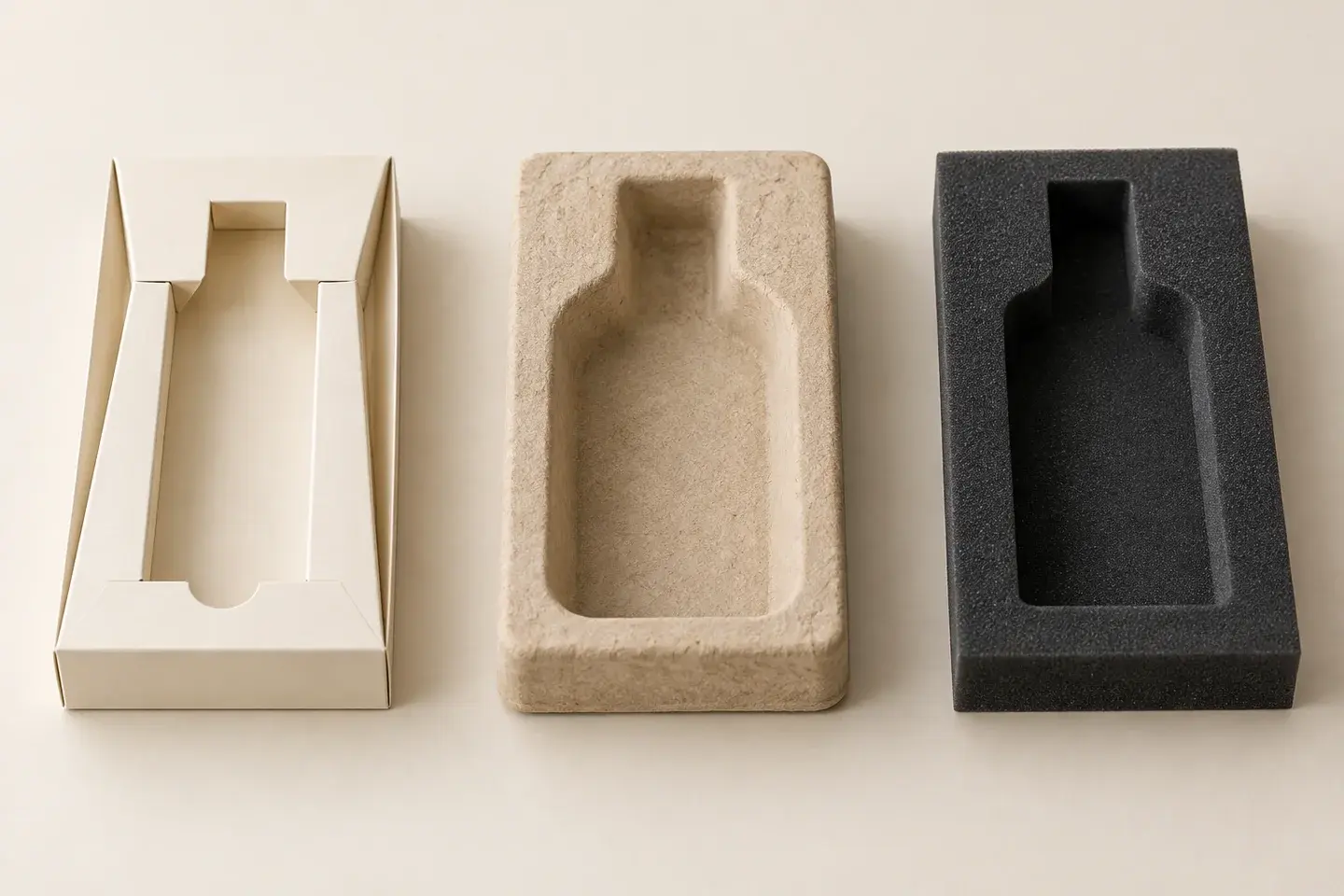
Check load-bearing folds and product contact points.
Review cavity tolerances, tooling and surface finish.
Identify the polymer, covering and adhesive.
Molded pulp can form product-specific cavities, but tooling, surface finish, tolerances and order volume affect feasibility. Foam may suit delicate finishes or complex shapes, yet its polymer, covering and adhesive need identification. Ask whether the insert separates cleanly from the box and how each component is handled after use.
Audit lamination, magnets, ribbons, windows and adhesives individually. Lamination may protect print from scuffing; a window may reveal the product; a magnet may control closure. Keep the function only if it matters, then compare a simpler alternative. A paper closure, printed reveal or removable accessory can change material combinations, but must still work in a sample.
Use the terms precisely: paper-based describes composition; recycled content describes feedstock; recyclable concerns the finished pack and its recycling route; reusable concerns repeated use. None proves the others. A box kept for household storage does not by itself establish a regulated reuse system.
Use Foldelle’s materials and finishes guide to frame options, then request the exact construction and supporting evidence for the proposed pack.
What to Ask Your Packaging Supplier Before Ordering
Ask for answers against one versioned specification, not an assortment of attractive reference photos:
- Materials: What are the board grade, thickness, paper weight and component weights? Which recycled-content or certification claims have documentation covering this order?
- Dimensions: Which measurements are internal, what tolerances apply, and how do gift box and shipper fit together?
- Insert and accessories: What retains each product? Identify foam type, films, magnets, ribbons, adhesives and whether components detach.
- Evidence: What material declarations, relevant test reports or other supporting documents can be supplied? Agree who assesses destination-market requirements and prepares required compliance documentation.
- Samples: Which sample verifies fit, color and finish? What differs from production, and what transit assessment is needed for the route?
- MOQ and schedule: What is the minimum for each size and artwork version? Confirm sampling, approval, production and delivery milestones, plus tooling and assembly charges.
Foldelle’s minimum quantities and timing depend on the complete specification. Share your launch arrival date and quantity range so feasibility can be reviewed. Material credentials do not guarantee the finished packaging meets every PPWR requirement.
A Practical Packaging Review Checklist for Your Next Launch
- Unpack the current system. List the product pack, gift layer, insert, accessories, shipper and loose fill. Record dimensions and weights.
- Define non-negotiables. Identify fragile areas, shelf needs, opening sequence, packing speed and EU sales destinations.
- Compare two constructions. Change unnecessary space or duplicated components while keeping protection requirements fixed.
- Sample with real contents. Check loading, retention, removal, closure, rub marks and the agreed shipping performance.
- Confirm the purchase. Approve materials, artwork, component list, evidence, quantity, responsibilities and delivery plan in writing.
Compare the total order cost, including development, packing labor, freight and likely damage exposure. A lower material weight alone does not establish a lower total cost or environmental impact.
Frequently Asked Questions
Does the PPWR affect brands outside the EU that sell into the EU?
Yes. Packaging placed on the EU market is within scope regardless of origin. Map the obligations of the brand, importer and other operators for your actual sales route; location outside the EU does not remove the issue.
Are paper gift boxes automatically recyclable?
No. Check the finished construction, including liners, coatings, glued components and inserts, against the collection and recycling route in the destination market. A paper outer surface is not sufficient evidence.
Can premium gift packaging use fewer components?
Often, yes. Start by removing duplicated decoration or replacing separate dividers with one fitted insert. Keep any component needed for protection, opening or handling until a sample confirms the alternative works.
How do I choose between a rigid gift box and a mailer box?
Decide whether presentation or parcel delivery is the pack’s main job. Sample a rigid format for a deliberate gift reveal and a corrugated mailer for shipping; assess both together if your order needs both layers.
Make your next packaging brief more precise.
Foldelle develops custom paper packaging with structural design, sampling and production through our own factory. Send your product dimensions and weight, order quantity, sales markets and packaging purpose—retail, gifting or shipping—along with any references. We can review structure, materials and inserts around those requirements.
Start Your Packaging ProjectOfficial References
Regulatory sources checked on . This guide supports packaging purchasing decisions; product- and market-specific compliance needs separate assessment.